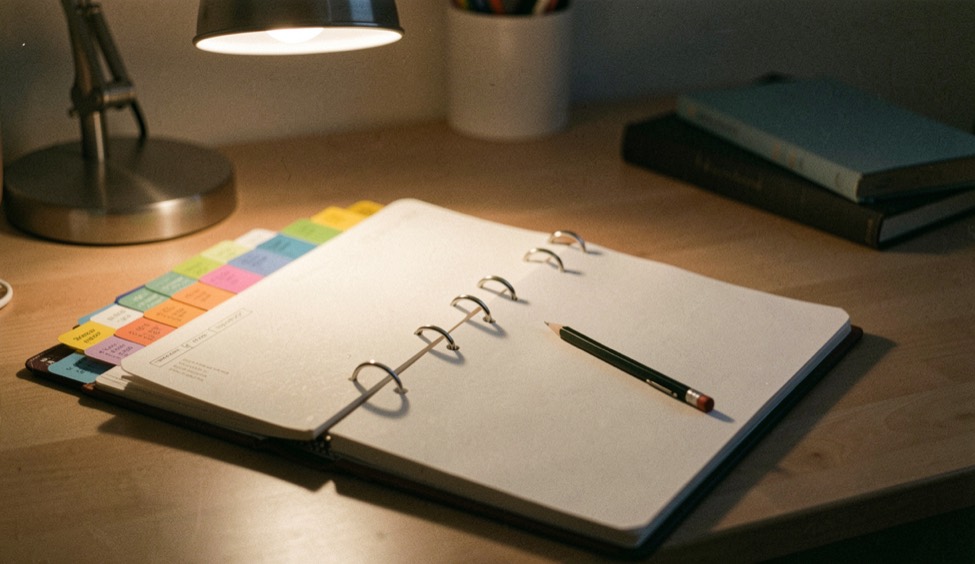
The Cornell page, six months later
The two column layout is easy to draw and easy to abandon. What the page has to contain on the day of the lecture for it to still be worth opening in revision week, and the ten minutes that make the difference.
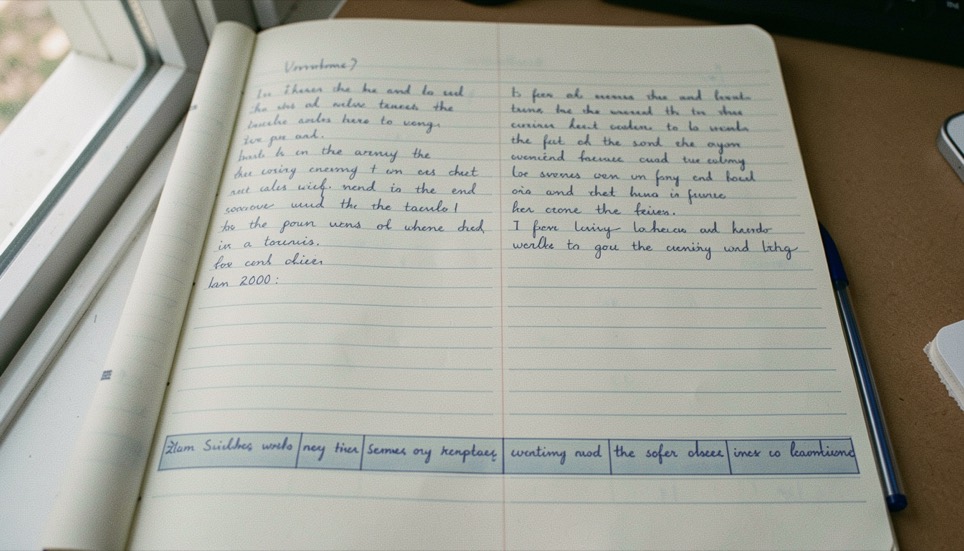
Everything in this section is about the same two objects: the page you fill while somebody is talking, and the page you reopen months later. The methods that survive are the ones that connect the two.
Speed is not the goal. A lecture can be transcribed almost perfectly and still leave nothing behind, because a transcript is read rather than used. The guides below deal with the practical choices instead: what to write down and what to trust the slides for, how much white space to leave, when handwriting beats a keyboard, and what has to happen in the ten minutes after the room empties.
The two column layout is easy to draw and easy to abandon. What the page has to contain on the day of the lecture for it to still be worth opening in revision week, and the ten minutes that make the difference.

Typing keeps up and remembers less. Writing falls behind and forces a decision on every line. The choice depends on the subject, the lecturer and whether the slides are published afterwards.
Copying a page out neatly feels like work and produces very little memory. The same hour spent turning the notes into questions produces a great deal, and leaves something reusable behind.
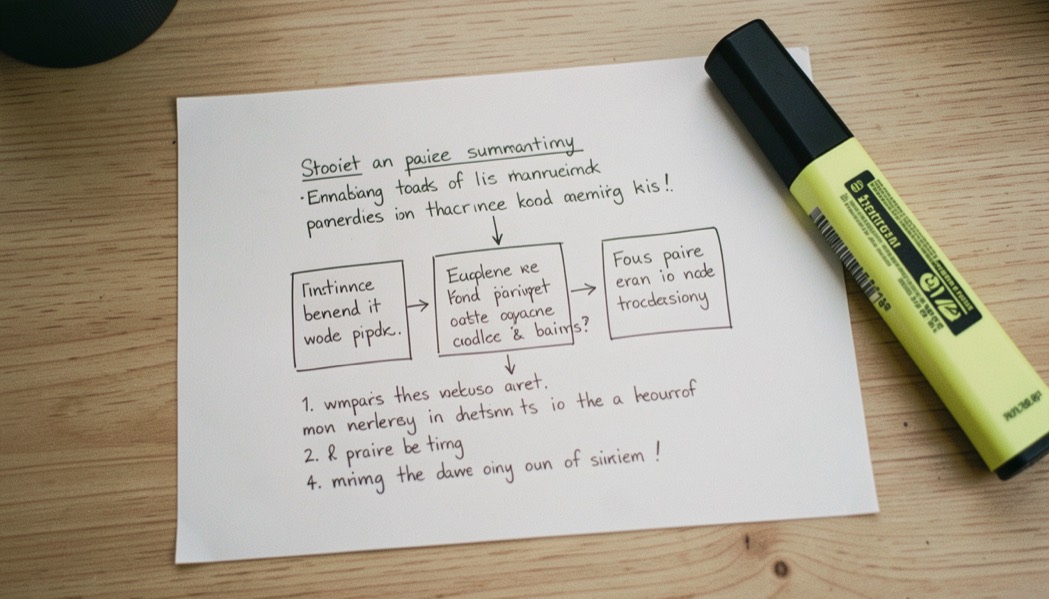
One sheet per topic, written from memory and corrected against the notes. It is slower than it looks, and it is the closest thing to an exam rehearsal you can do in week three.
A good page of notes only earns its keep when something is done with it. The revision section covers what comes next: spacing, retrieval and the timetables that hold together past the second week.