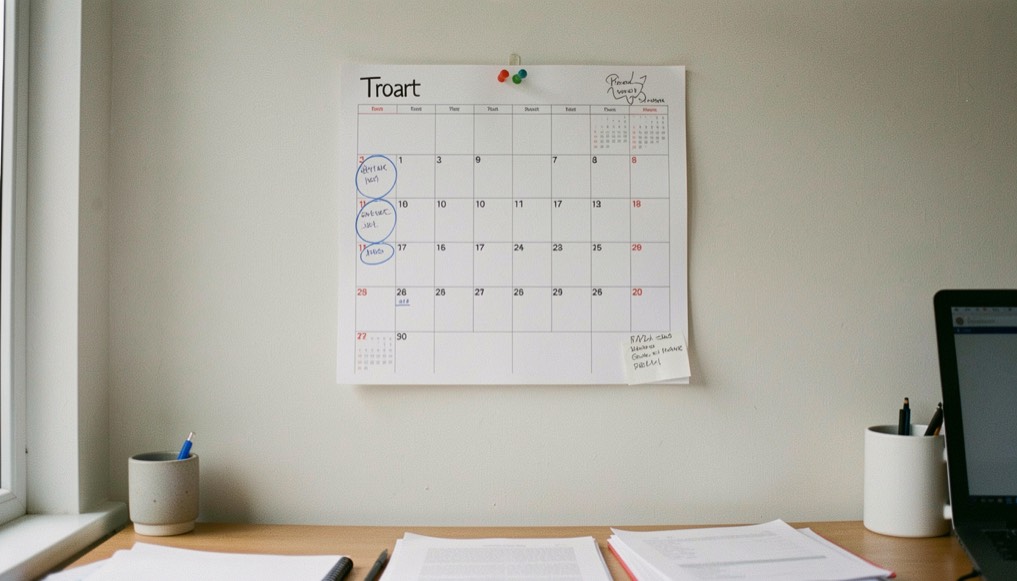
Spaced repetition without an app
Three boxes, a calendar and a rule about what moves forward. The paper version is slower to set up and much harder to quietly abandon.
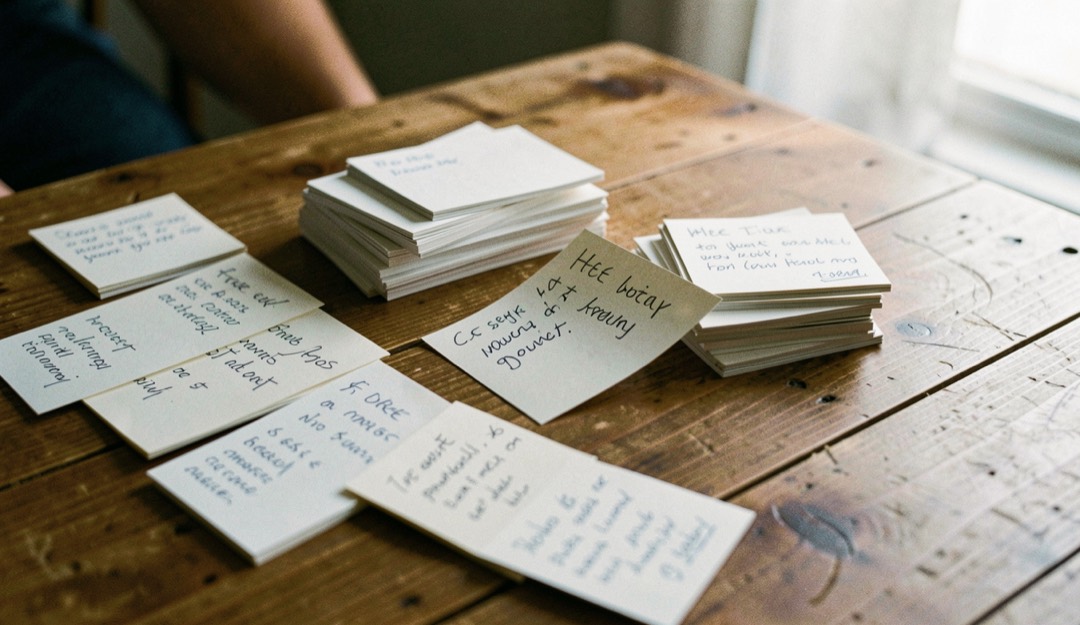
Revision is the part of a degree with the largest gap between what is popular and what works. Rereading, recopying and colouring feel productive and leave very little behind; retrieving, spacing and mixing feel worse in the moment and are what actually moves material into memory that lasts until June.
This section treats each method as a procedure rather than as a principle: which box a card goes into when you get it wrong, how long a block runs before you switch subjects, how many new cards a week a module can absorb, what to do with the session you missed on Tuesday. Where a method has a limit, and every one of them does, the limit is written next to the method rather than left for you to discover in an exam hall.
Three boxes, a calendar and a rule about what moves forward. The paper version is slower to set up and much harder to quietly abandon.
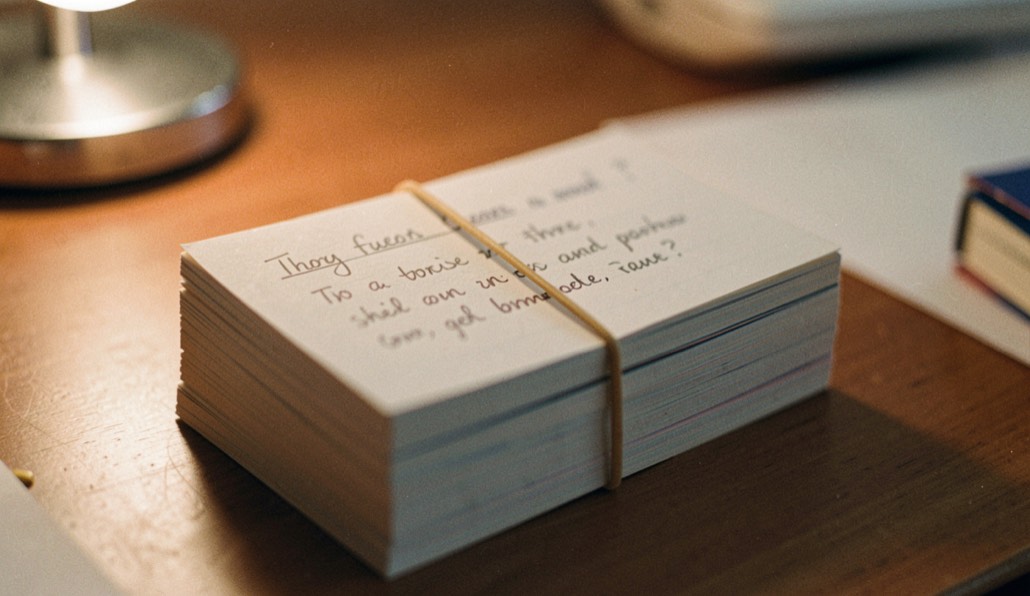
Most cards test recognition and feel productive. Rewriting the front of the card so it demands an explanation changes what the pack is worth.

Blocked revision feels smooth and transfers badly. Mixing two subjects in a sitting feels worse on the day and holds up when the questions arrive shuffled.

Most revision plans are built for a version of you that never gets ill, bored or invited out. What has to be in the timetable for it to survive the first bad week.
Knowing the material and producing an answer in forty minutes are different skills, and only one of them is trained by cards. The exam section covers the clock, the mark scheme and the final days.