
Keys and the signed agreement on the first morning in a new house.
Housing is the largest single line in almost every student budget, and the decision is made in the strangest circumstances: in February, for a house you will occupy in September, with five other people, after twenty minutes inside the property, under the impression that everything good will be gone by the weekend.
That pressure is largely manufactured, and it is the reason most of the avoidable mistakes get made. In most towns there is more supply later in the spring than the February panic suggests, and the houses signed for in a rush in week five are not systematically better than the ones signed for calmly in April.
Before signing
Read the agreement, including the parts written in the same paragraph as everything else. The points that matter are the length of the term, whether it runs for twelve months or for the academic year, the total rent for the whole period rather than the weekly figure, what is included, and the notice arrangements.
Find out precisely what the joint arrangement means, because it is the clause that causes the most damage between friends. Under a joint tenancy the group is collectively responsible for the whole rent, so if one person leaves or stops paying, the others owe the difference. That is not a reason to avoid it, since it is the standard arrangement for a shared house, but it is a reason to know it before rather than after.
Ask what the bills situation is and get the answer in writing. All inclusive can mean genuinely inclusive or inclusive up to a capped amount with the excess billed later, and the difference is substantial in a cold winter. Where bills are not included, find out who the current supplier is and roughly what the property costs to heat, and ask the outgoing tenants rather than the agent.
Check the deposit arrangements before any money moves. Ask which protection scheme the deposit will be placed in, and expect a straightforward answer. Be careful with holding deposits and administration fees, which are regulated in many places and are the usual site of the first dispute.
Finally, look at the property properly. Damp in the corners of bedrooms, the age and type of the heating, whether the windows close, whether there is a working alarm, and how far it actually is from where you have to be at nine in the morning, which is a housing decision long before it becomes the scheduling problem described in sleep and the nine in the morning lecture. Ask the current tenants what they would warn you about, out of the agent's hearing, and take the answer seriously.
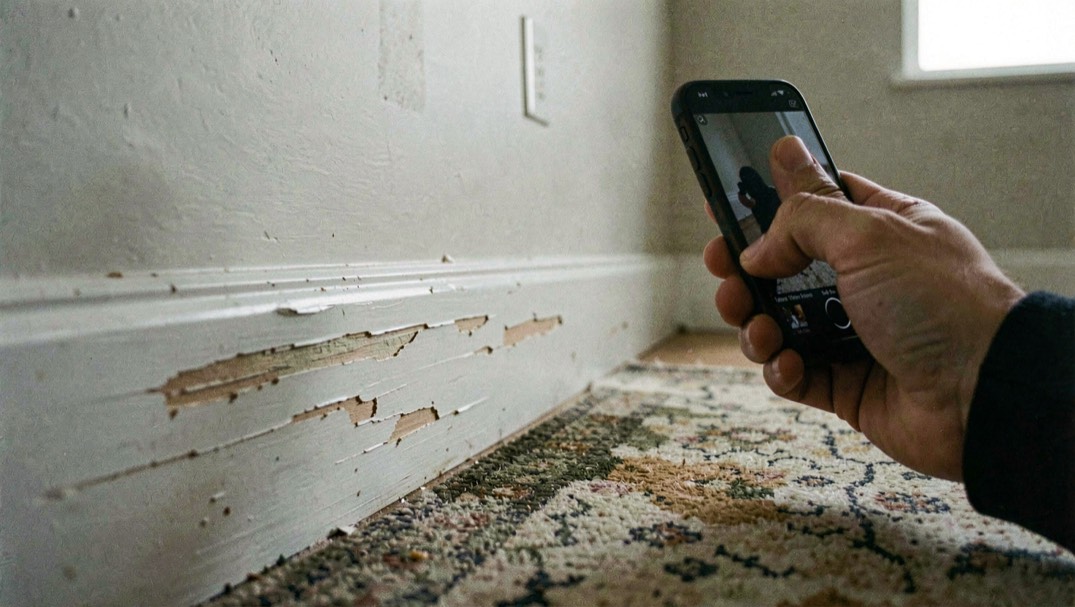
Damage being photographed on the first day, before anything is unpacked.
The first day, which decides the last one
The deposit is returned or withheld on the basis of the difference between the property at the start and at the end, and the evidence for the start is whatever you record in the first forty eight hours. This is the highest value hour of the whole tenancy.
Go through the inventory the agent provides, room by room, and add everything they missed. Photograph every mark, stain, burn, broken fitting, damaged blind and worn carpet edge, with something in frame that gives scale. Photograph the meters and write down the readings with the date, which also protects you from being billed for the previous tenants.
Then send the whole lot to the agent or landlord by email, in writing, within the period the agreement specifies, and keep the sent message. A folder of photographs on a phone with no timestamped record of having been sent is much weaker evidence than the same photographs attached to an email.
Report faults in writing as they occur, throughout the year, even minor ones. A repair requested by message and never followed up in writing tends not to exist by June, and a pattern of written reports is what makes a heating fault the landlord's problem rather than an argument.
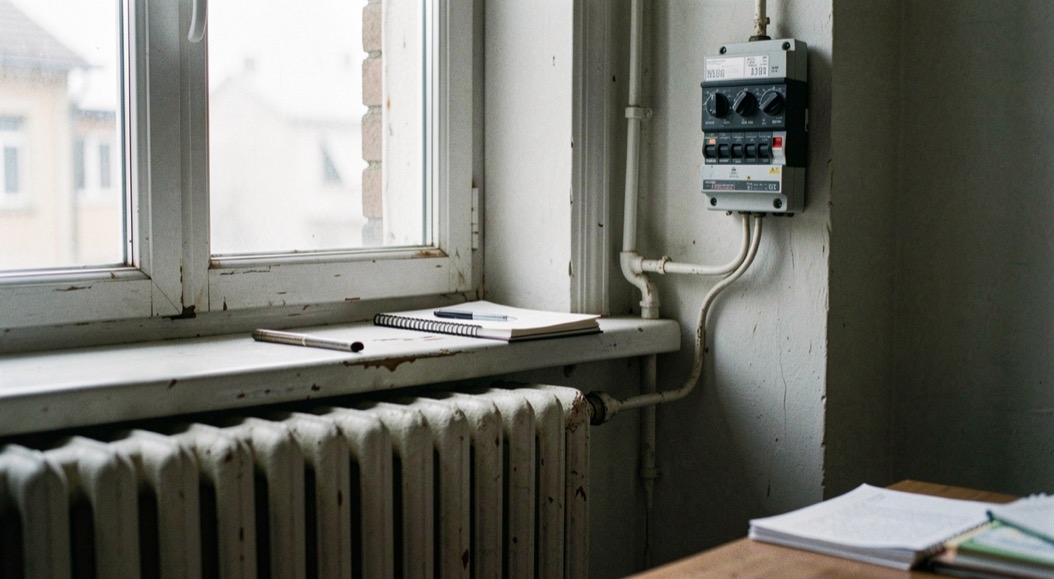
A meter read and written down on the day the keys were collected.
Living with bills and leaving cleanly
Where bills are not included, decide the arrangement in the first week rather than in the first argument. One person named on each account with a standing transfer from everyone else is the usual workable shape, and it needs a written record of who pays what and when. Rotating the responsibility across housemates spreads both the admin and the risk.
Keep the housing figures in the term view of your budget rather than in your head, since rent instalments and the deposit for the following year rarely fall in convenient months. That is one of the reasons the term calendar exists in a budget sheet that survives term one.
At the end, clean the property properly and photograph it again from the same angles as the first day. Most deductions are for cleaning and for rubbish left behind, both of which are avoidable with an afternoon and a shared effort. If a deduction is proposed that you disagree with, the protection scheme will usually have a free dispute process, and it is decided on evidence, which is the reason the first day mattered.
Four things decide how a tenancy ends, and all four happen at the start:
- The agreement was read, including the joint liability and the length of the term.
- The deposit went into a protection scheme and you have the confirmation.
- A photographic inventory with meter readings was sent in writing in the first days.
- Every fault was reported in writing, and the messages were kept.
The limit is that rules on deposits, fees and notice vary by country and sometimes within one, and halls of residence operate under different arrangements again, often with their own contract and their own complaints route. Nothing here replaces reading the specific agreement in front of you or asking the student union advice service, which exists precisely for this and is free.
The other limit is timing. All of this assumes a choice, and a first year in halls usually has none, which is fine: the inventory habit still applies and matters just as much. The real decision arrives in the second year, in February, in a hurry, and the best preparation for it is having read the agreement for the place you are already living in. Getting the paperwork sorted early also belongs on the arrival list in the first fortnight, hour by hour.