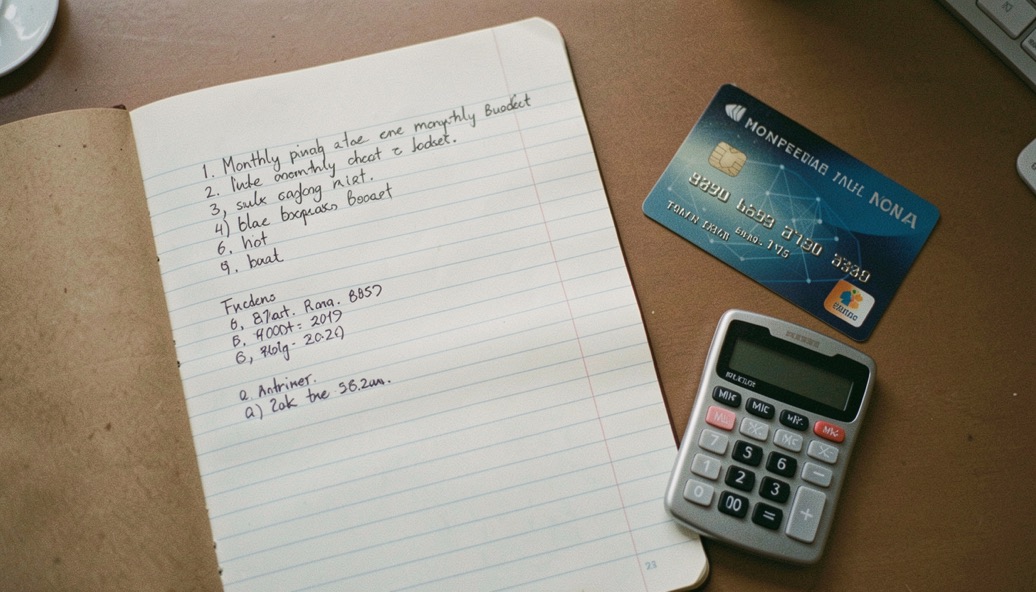
A month laid out by hand, with the fixed costs at the top and the weekly allowance underlined at the foot.
Student money has an awkward shape. A term's living costs arrive as one payment, sometimes two, and then have to be spread over eleven or twelve weeks against outgoings that are mostly small and mostly invisible. A bank balance is a terrible instrument for managing that, because it tells you what you have and nothing about what is already spoken for.
The sheet exists to answer one question: how much can I spend this week without a problem in March. Everything else it does is secondary.
Build it in three layers
The first layer is fixed costs. Rent, any bills not included in the rent, phone, insurance, transport pass, subscriptions. These are known, dated and non negotiable in the short term, and they come off the top of the term's money before anything else is considered.
The second layer is committed but variable: food, laundry, household basics, the travel that is not covered by a pass. Estimate weekly rather than monthly, because you buy food weekly and thinking in months is how the estimate goes wrong.
The third layer is everything else. Going out, clothes, books that are not in the library, the birthday you forgot, the society kit. This layer is where every budget actually fails, because it is made of decisions rather than of bills.
Then do the division. Take the term's money, subtract every fixed cost for the whole term, subtract the food estimate for the whole term, and divide what remains by the number of weeks. That number is your weekly discretionary figure, and it is the single most useful number in the exercise. Write it at the top of the sheet where you will see it.
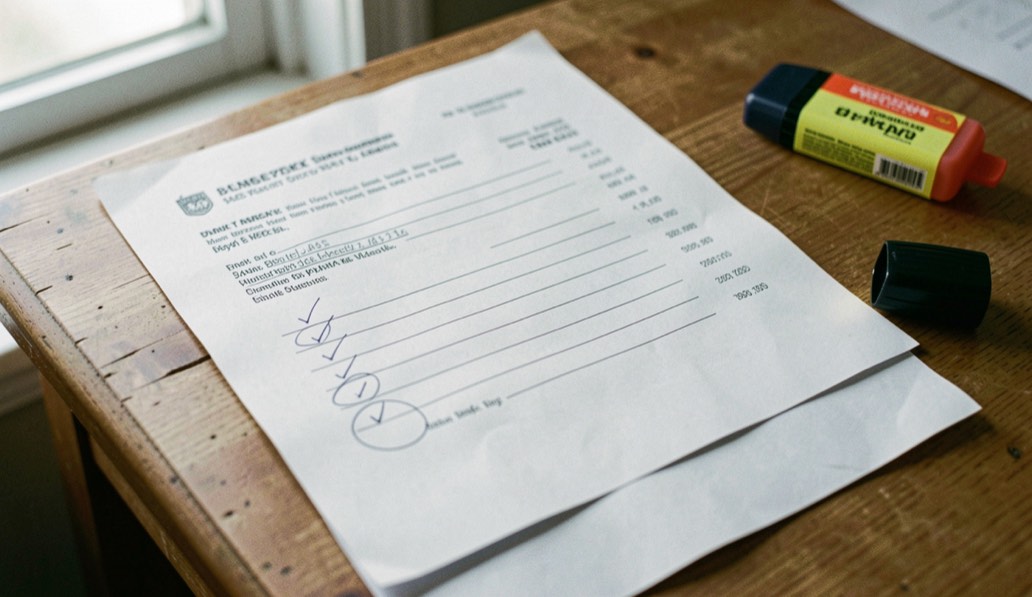
A month of transactions gone through line by line, with the recurring payments circled.
The leaks, and how to find them
Nobody wrecks a budget with one large purchase. It goes on coffees, delivered food on the evenings when cooking felt impossible, a subscription taken out in September for a free month, the small top ups that never feel like spending because they are small.
Find them by tracking everything for two weeks. Not forever, and not as a permanent discipline that will collapse by October. Two weeks of writing down every payment produces a list that is almost always surprising in the same way: the total spent on food bought at the moment of hunger is far larger than anyone expects, and the subscriptions add up to something you would not have agreed to as a single monthly payment.
Then treat the two largest leaks specifically. Delivered food usually responds to having something in the freezer rather than to willpower. Subscriptions respond to a five minute audit of the recurring payments on a statement, which is why the statement is worth reading line by line once a term.

One weekly shop, with the receipt kept for the two week tracking exercise.
The habit that makes it work
The format matters far less than the frequency. A paper page in the back of a notebook works as well as a spreadsheet, provided it is updated on the same day every week. Sunday evening, ten minutes, three numbers: what came in, what went out, what is left against the weekly figure.
Keep a term view alongside the weekly one, because the failures are almost always seasonal rather than weekly. Rent instalments, the trip home at the end of term, a field course fee, the deposit on next year's house that falls due in February while you are still paying for this one. Marking those on a term calendar, next to the review slots from a revision timetable that holds after week two, keeps them from arriving as shocks.
Build a small buffer if you can, and treat it as a fixed cost rather than as what is left over. Somewhere between one and two hundred is enough to absorb a broken laptop charger, a replacement textbook or a train home at short notice, which are the events that otherwise turn a tight month into borrowing.
A sheet is doing its job when:
- Fixed costs for the whole term are subtracted before any weekly figure is calculated.
- A single weekly discretionary number sits at the top of the page.
- It is updated on the same day each week, in under ten minutes.
- Term sized items are marked on a calendar rather than remembered.
The limits have to be said clearly, because budgeting advice that ignores them is insulting. A sheet allocates money and cannot create it. Where the term's income genuinely does not cover rent and food, the arithmetic will show that in week one, and the useful responses are institutional rather than personal: hardship funds, which most institutions hold and underspend, a conversation with the student support office, and a check that every entitlement has actually been claimed. Finding that out in October is a completely different situation from finding it out in February.
The second limit is that adding paid hours is not a free solution. Income earned during term costs time that comes out of the same week as the reading, and the trade is worked through in part time hours without wrecking the term. The largest single line in most student budgets is housing, and the decisions that fix it for a year are made in a hurry in February, which is why deposits, bills and the tenancy is worth reading before signing anything rather than after.